
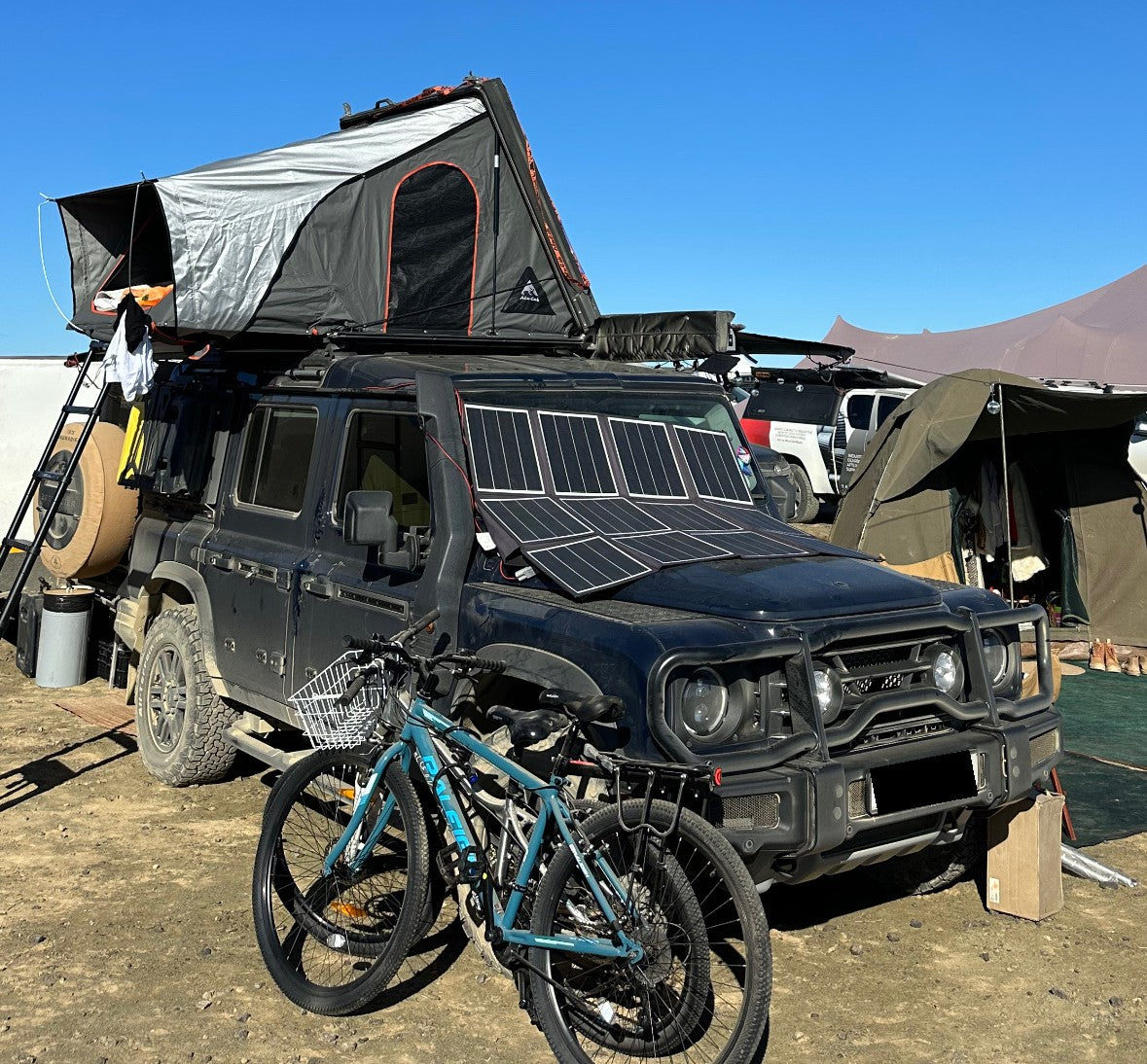
For decades, the go-to way to power a fridge, lights, comms and other 12V gear on an overlanding trip has been a fixed dual-battery system. It's a proven solution — but it comes with one fundamental limitation:
The battery system belongs to the vehicle.
Today there's another option. A Portable Dual-Battery System (PDBS) lets you carry substantial auxiliary power without permanently installing anything into your vehicle. If you change vehicles, tow a trailer or caravan, want to avoid permanent modifications, or simply want more flexibility from your investment, it's worth a serious look.
What is a Portable Dual-Battery System?
A PDBS does the same job as an auxiliary battery system: it stores energy to run your equipment when the engine is off. The difference is that the battery and power management live inside a portable power station instead of being built into the vehicle.
Depending on the system, it can charge from:
- The vehicle's alternator while driving
- Solar panels while stationary
- Mains electricity when available
And it supplies both DC and AC power. The result is an auxiliary power system that doesn't have to stay in one vehicle.
1. Your power moves with you — and grows with you
This is the heart of it.
A fixed system is installed in your vehicle. Sell that vehicle, or take a different one on a trip, and your auxiliary power either stays behind or has to be stripped out and reinstalled.
A power station belongs to you. Move it from the 4x4 to the trailer. Carry it to the campsite. Take it inside for backup power at home. Change vehicles without rebuilding anything.
Your first overlanding vehicle probably won't be your last. Your camping setup will evolve, your trips will get longer, your electrical loads will grow. With a permanent installation, every one of those changes means modifying or replacing the system. With a PDBS, the power simply comes along — which protects the usefulness of your investment as your adventures change.
2. No permanent installation required
A traditional dual-battery build is a collection of separate components: an auxiliary battery, mounting, a DC-DC charger, an MPPT solar controller, cabling, fuses and circuit protection, an inverter and distribution gear. Each one has to be specified, sourced, mounted, wired and fused correctly — and each connection is a point that can fail out on the trail.
A portable power station arrives with all of that already inside it: battery, MPPT, pure-sine-wave inverter and outputs, engineered to work together and tested as one system. There is no installation to get wrong, nothing to specify or match, and far less to go wrong later. It's especially attractive for vehicles that are leased, financed, shared, or doing daily-driver duty during the week.
3. Charge safely and efficiently while you drive
Flexopower designs its charging around the demands of overland travel. FlexoDrive uses matched, managed charging built for the specific Lithium power station, rather than simply maximising charging power.
- FlexoDrive 320W — charges the Lithium700 and Lithium1200
- FlexoDrive 640W — higher-speed charging for the Lithium1200 and Lithium2400
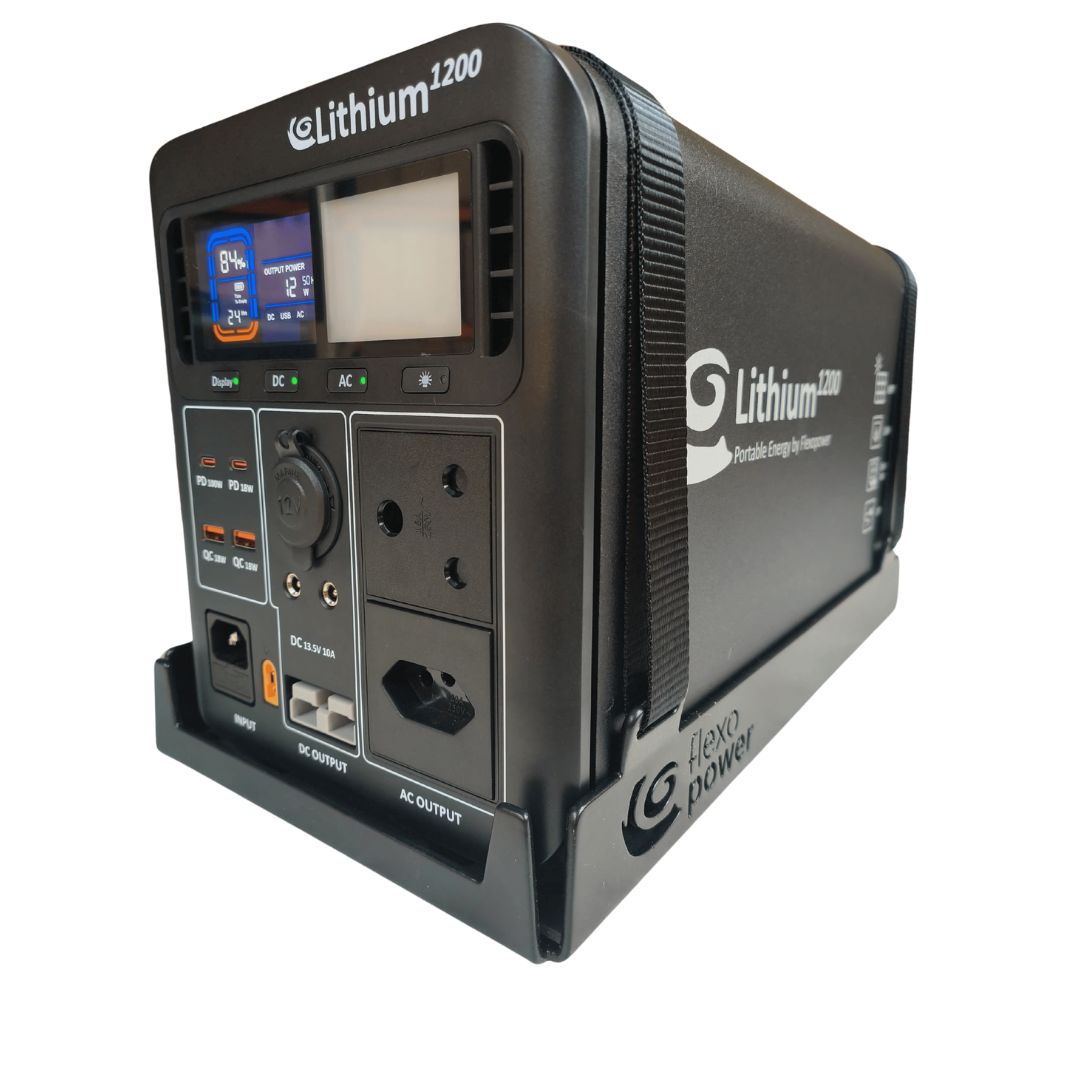
- Lithium2400 — accepts direct alternator charging up to 30A with no external charger, and also pairs with either FlexoDrive
Both FlexoDrive units are managed from the Flexopower app, available on the Apple App Store and Google Play.
4. Solar keeps working while you're at camp
Your power system shouldn't depend entirely on the vehicle. Pair a Flexopower Lithium power station with a suitable solar panel and it keeps replenishing energy while you're parked — no need to start the engine just to top up a battery. That matters most when you stay in one spot for a few days.
For extended off-grid travel, the two charging methods work together:
Drive → charge from the alternator. Stop → charge from solar. Camp → use stored energy.
5. AC and DC power from one system
Modern overlanding involves more than traditional 12V gear. Fridges, lights and pumps may be DC, but laptops, cameras, chargers and TVs need AC.
The Flexopower Lithium range delivers both. The Lithium2400, for example, combines a 2560Wh LiFePO4 battery with a 2400W pure-sine-wave inverter — comfortably more than the typical loads a conventional dual-battery installation is built for.
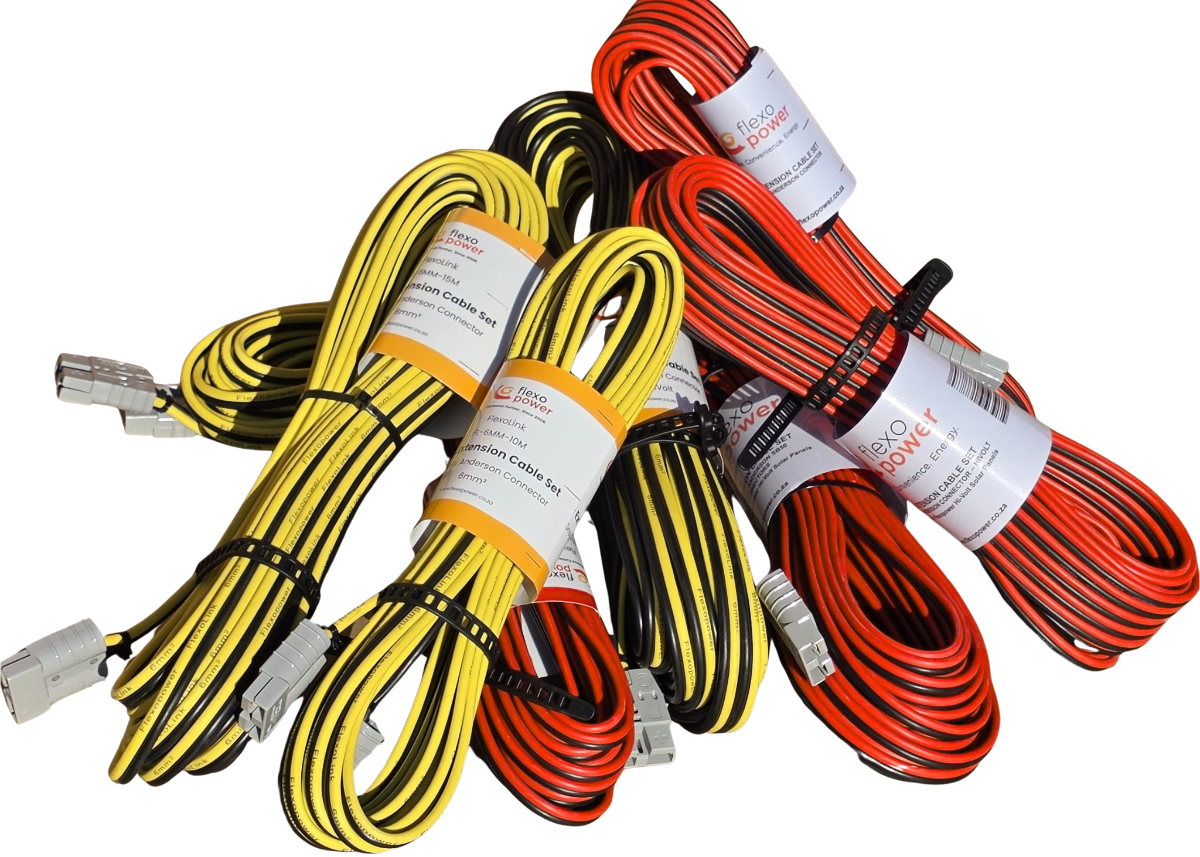
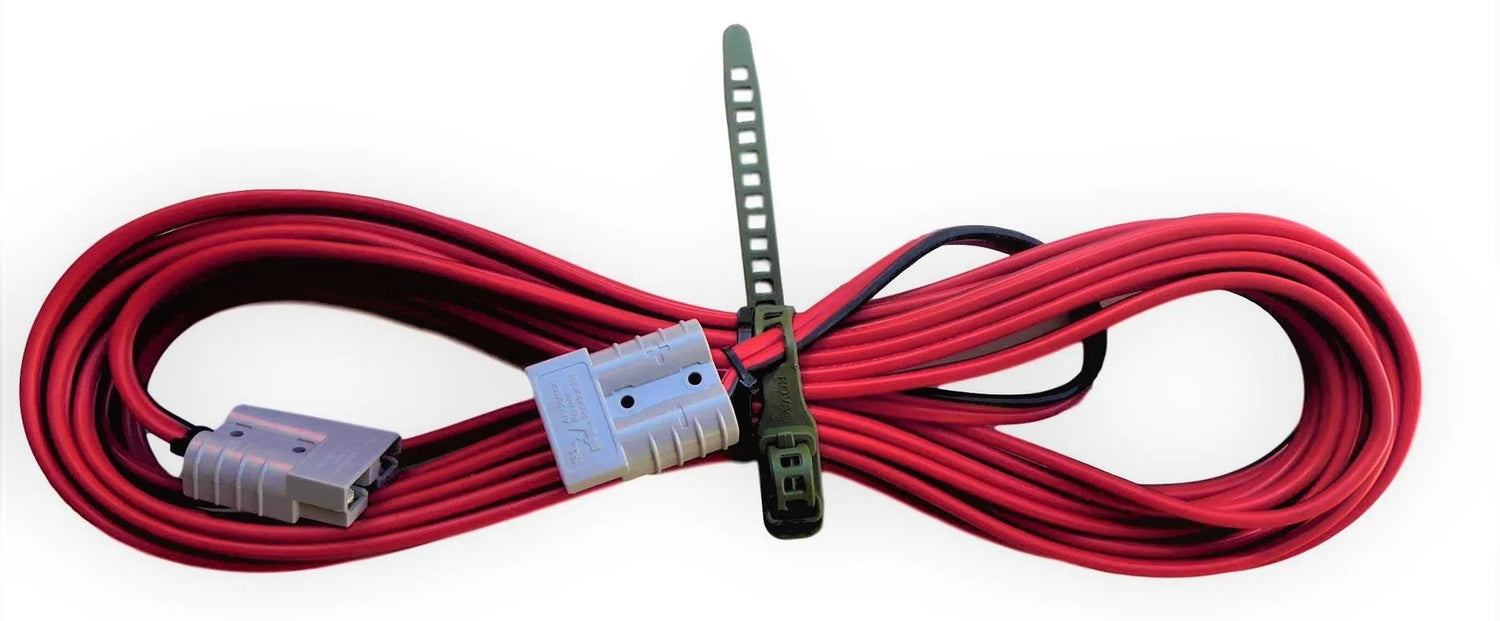
Your auxiliary power doesn't have to stop at the fridge. On the DC side, Flexopower uses Anderson SB50 connectors — a robust, high-current fitting built for the repeated connecting and disconnecting that portable power involves, with the Lithium1200 and Lithium2400 delivering 30A through it.
6. Choose the capacity that fits your adventure
A weekend away with a fridge and a few lights is a very different proposition from a long expedition running refrigeration, comms, computers and camera gear.
The Flexopower Lithium range spans compact portable units through to high-capacity models like the Lithium2400, so you can build around what you actually need — rather than fitting the biggest possible battery simply because the vehicle has room for it.
Where a fixed system still earns its place
To be straight about it: portable isn't the better answer in every case. The fixed dual battery remains a tried and tested system, and it has earned that reputation over decades of hard use.
Its strengths are real ones. A fixed system is wired in and secured. It starts charging the moment you turn the key, with nothing to plug in and nothing to remember. It can't be left behind on the kitchen counter or walk off a campsite.
The trade-off is straightforward. You give up install-and-forget permanence, and in return your power isn't locked to one vehicle. For plenty of overlanders that's a trade worth making — and if it isn't for you, a well-built fixed system is a perfectly good decision.
Is a PDBS right for you?
A fixed dual-battery system is still a good answer in some cases. If you have a dedicated expedition vehicle, want a fully integrated electrical installation and never need to move it, a permanent install makes perfect sense.
A PDBS deserves serious consideration if you change vehicles regularly, use your 4x4 as a daily driver too, want to avoid permanent modifications, tow a trailer or caravan, need power away from the vehicle, or want one system that can also provide backup power at home.
Why Flexopower
Flexopower has been developing mobile energy solutions since 2006, focused on reliable power that moves with the user. Our Lithium stations are genuinely solar-agnostic: the Lithium700 and Lithium1200 accept 10–60V solar input, and the Lithium2400 accepts 12–75V. That wide window means most panels on the market will work — they perform best with FlexoSun, but you aren't locked to us to keep charging.
The real reason to switch
The argument for a Portable Dual-Battery System isn't simply that it replaces a fixed auxiliary battery. It changes what your auxiliary power system can be.
Your vehicle can change. Your camping setup can change. Your route can change.
Your power system doesn't have to.

0 comments