
How Much Solar Do You Need for Camping?
If you are new to solar, one of the first questions is usually:
How much solar do I actually need for camping?
There isn't one answer for everyone. It depends on what you want to power, how much energy you use each day and how long you want to stay off-grid.
But you don't need to make it complicated.
For most camping setups, there are three useful starting points: 165W, 260W and 400W.
Start with what you actually use
A typical camping setup may include a:
-
Fridge or fridge/freezer
-
LED lights
-
Phone and tablet chargers
-
Laptop
-
Water pump
-
Camera and other rechargeable equipment
Larger caravan and trailer setups may have two fridges or freezers and additional electrical equipment.
Every appliance takes energy from your battery. Your solar panel's job is to put that energy back during the day.
The more you use, and the longer you stay, the more solar capacity becomes useful.
Why solar isn't an exact calculation
Solar panel ratings are measured under standard test conditions. Camping rarely happens under standard conditions.
Actual solar production changes with:
-
Time of day
-
Season
-
Cloud cover
-
Panel angle
-
Partial shade
-
Temperature
Your consumption changes as well. A fridge or freezer generally works harder during a hot South African summer than on a cool day.
This is why we don't recommend choosing a panel based only on a theoretical watt-hour calculation.
A better starting point is:
What do you need to run, and how long do you want to stay off-grid?
FlexoSun 165W: for lighter requirements
The FlexoSun 165W is a good starting point for a normal camping setup with a fridge or fridge/freezer, lights and everyday electronic devices to last for a weekend.
It is particularly suited to campers who want a compact portable panel for weekends.
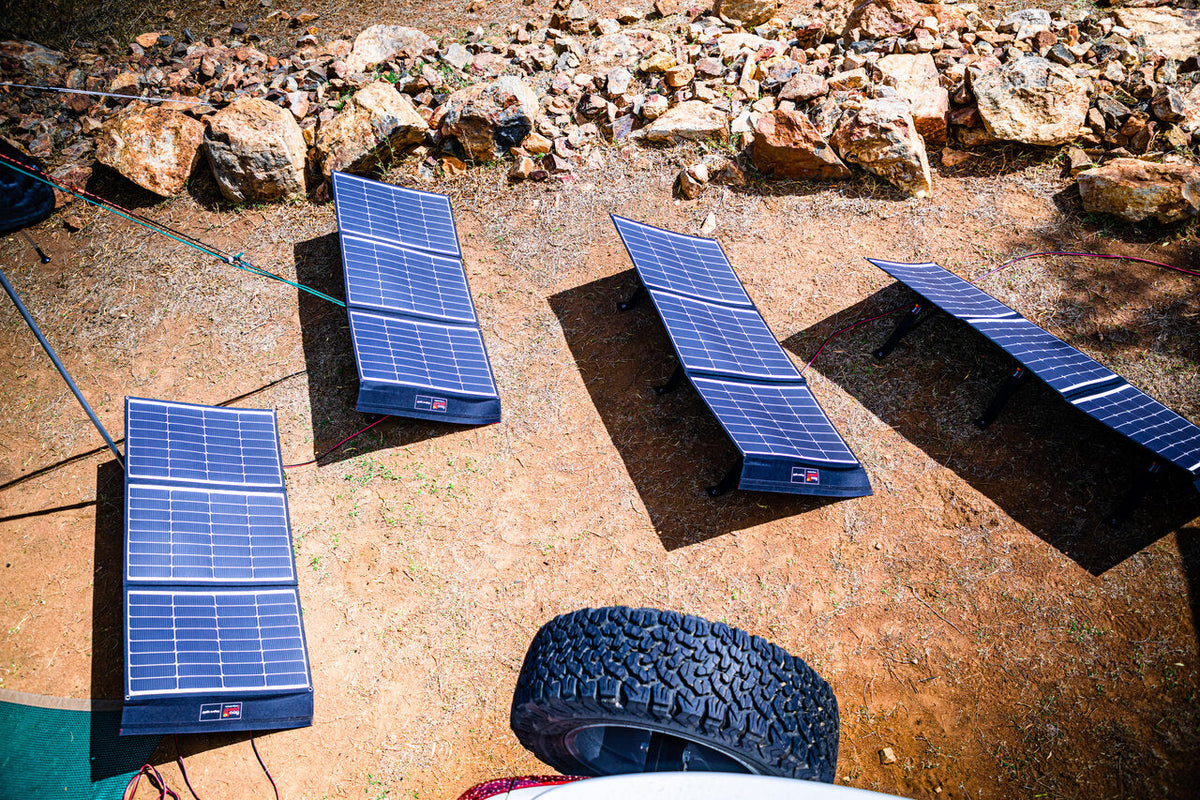
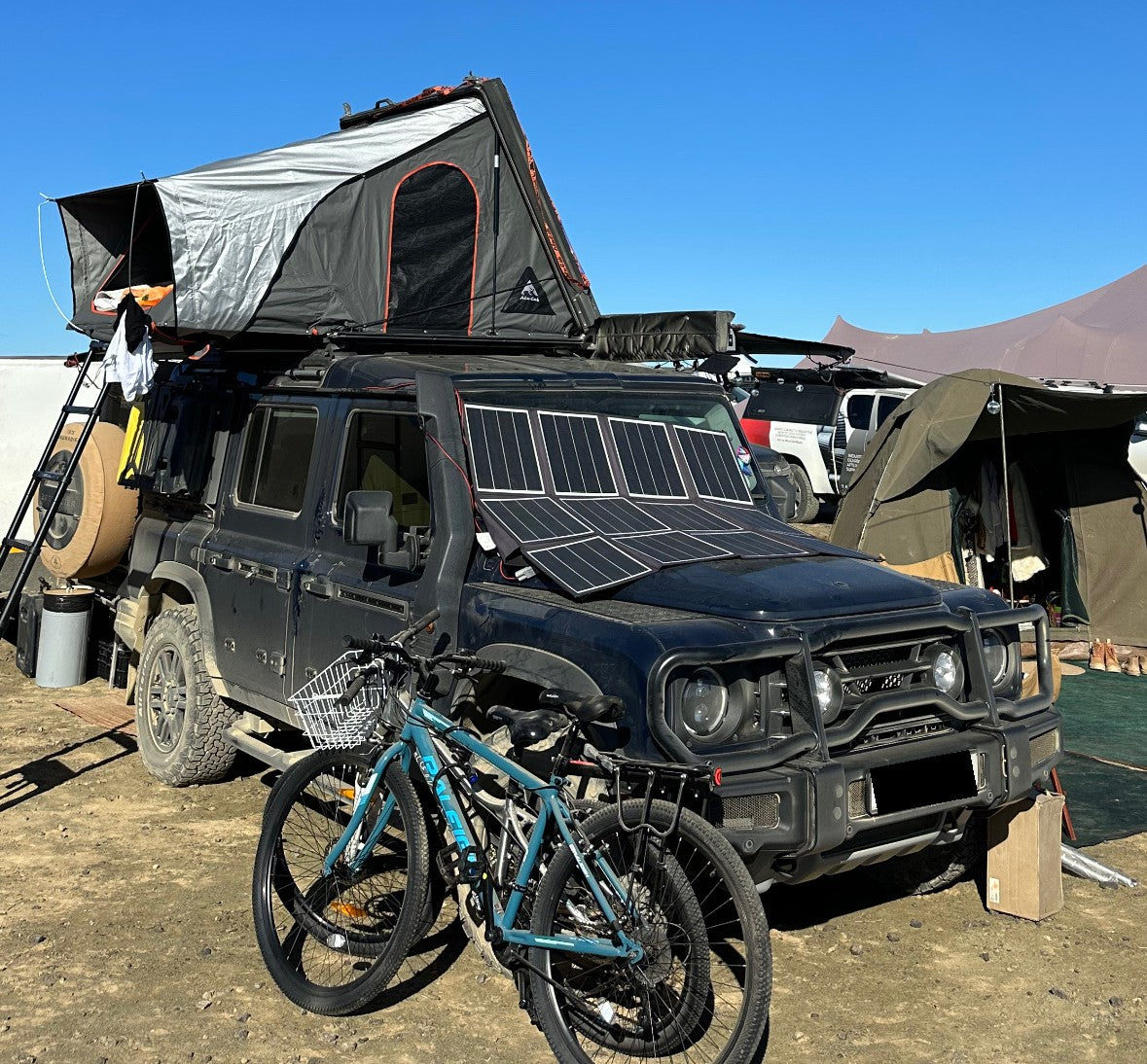
Like the rest of the current FlexoSun range, it folds for transport and can be positioned independently of your vehicle.
For lighter power requirements where packed size matters, 165W may be all you need.
FlexoSun 260W: our everyday choice
For most campers and overlanders, we recommend the FlexoSun 260W.
The additional solar capacity gives you more margin when conditions are less than ideal or when your daily consumption increases.
That becomes useful on longer trips. A cloudy afternoon, higher fridge consumption or additional devices can quickly change the amount of energy you need to replace.
The FlexoSun 260W remains portable and easy to store, while providing considerably more generating capacity than the 165W panel.
For a typical fridge/freezer, lights, electronics and longer periods away from mains power, 260W is our everyday recommendation.
FlexoSun 400W: when you need more power
Larger caravans, trailers and off-grid setups can consume substantially more energy.
The FlexoSun 400W is intended for these higher power requirements.
It is suited to larger battery systems, multiple fridges or freezers and other equipment that increases daily energy consumption.
It can be used on its own or, where the power station or solar charge controller is correctly specified, multiple panels can be combined to provide considerably more solar generation.
More solar capacity also gives you a larger window to recover energy when conditions are not ideal.
If you regularly stay off-grid for extended periods or have a larger electrical system, 400W is the logical place to start.
Which FlexoSun should you choose?
| Your setup | Our starting point |
|---|---|
| Lighter camping loads and shorter trips | FlexoSun 165W |
| Typical camping and overlanding | FlexoSun 260W |
| Larger caravans, trailers and heavier power use | FlexoSun 400W |
These are practical starting points rather than guarantees. Your battery capacity, actual consumption, weather and available sunlight still determine how long you can remain off-grid.
Don't park in the sun just for your solar panel
One advantage of portable solar is that the panel doesn't have to stay with the vehicle.
Park your vehicle, caravan or trailer in the shade and position the solar panel where it gets the best sunlight.
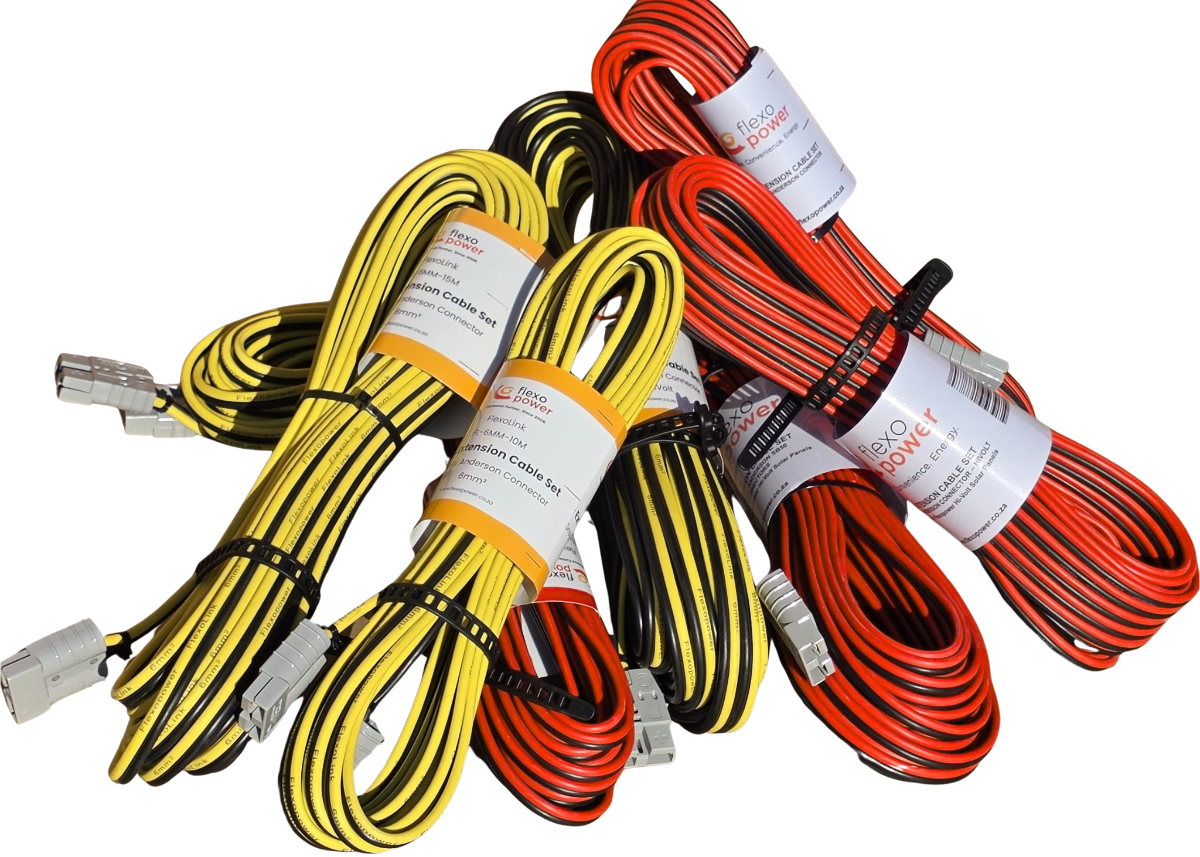
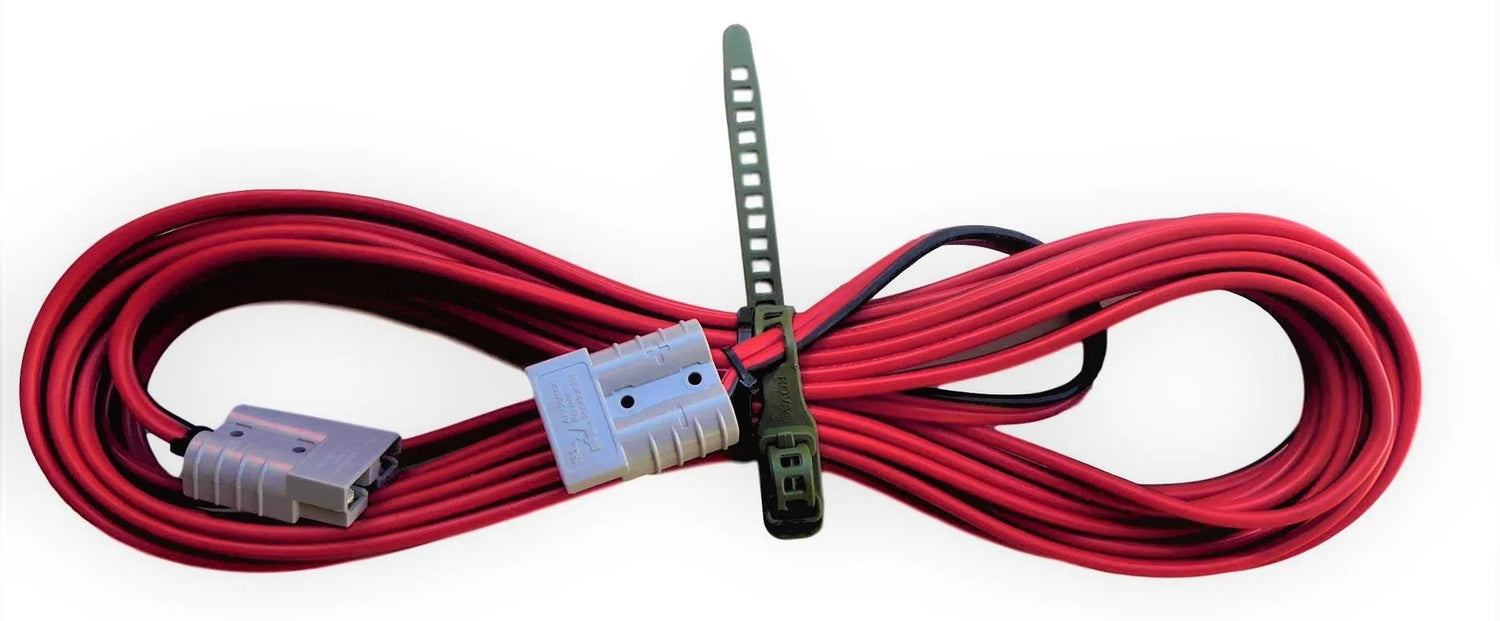
A suitable extension cable gives you the distance to do this.
For most everyday setups, we recommend the FlexoLink 6mm² 15m. The larger conductor helps reduce voltage drop over distance and provides additional margin in hot outdoor conditions, where the electrical resistance of copper increases with temperature.
Panel in the sun. Park in the shade.
Battery and solar have different jobs
It is also important not to confuse battery capacity with solar capacity.
Your battery stores energy. Your solar panel replenishes it.
A large solar panel doesn't necessarily solve the problem of a battery that is too small to carry your equipment overnight. Likewise, a large battery will eventually run down if you consistently use more energy than your solar system puts back.
A well-sized camping system needs both.
Keep the decision simple
If you're unsure where to start:
FlexoSun 165W — lighter loads and shorter trips.
FlexoSun 260W — our everyday recommendation for camping and overlanding.
FlexoSun 400W — larger systems, heavier loads and longer periods off-grid.
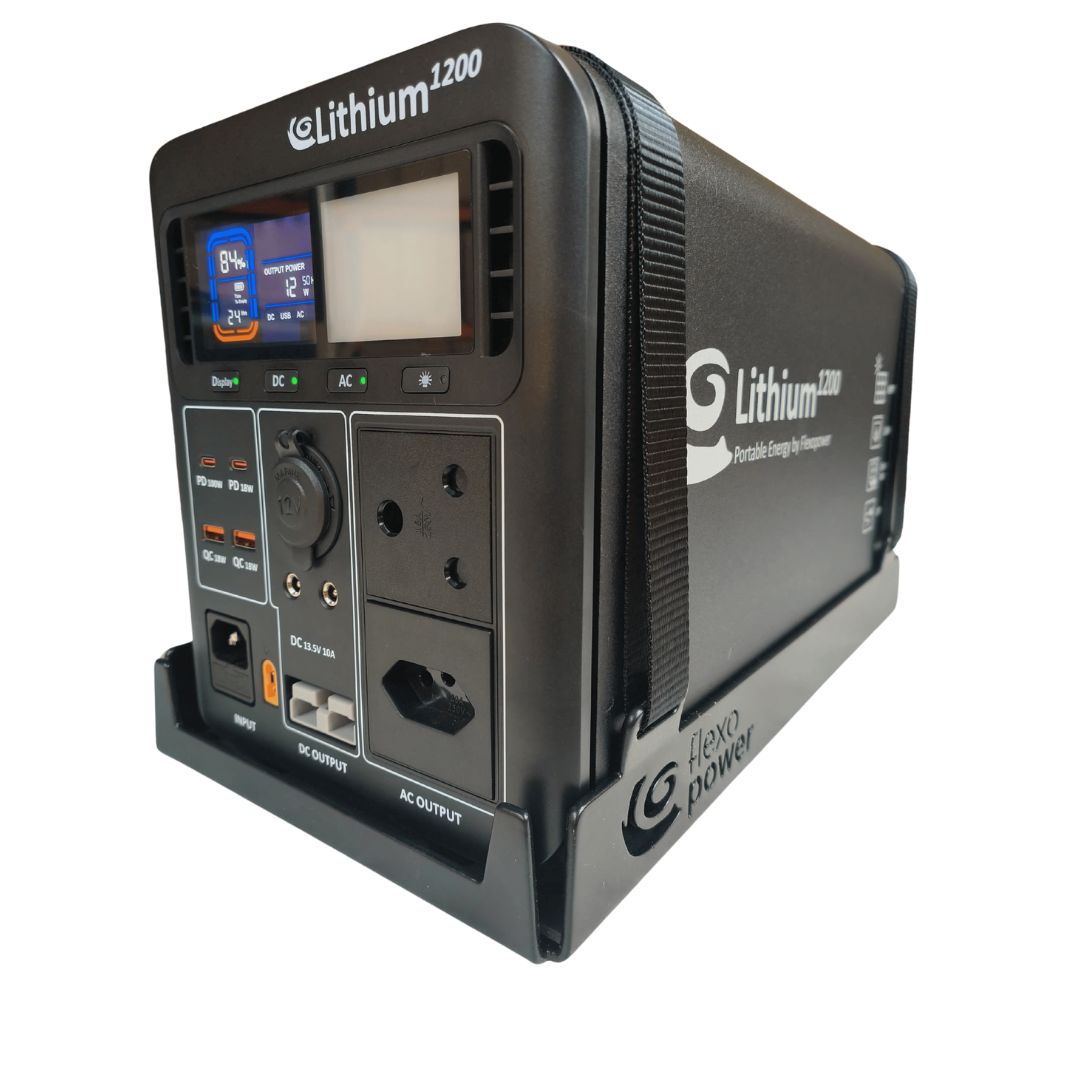
You don't need to calculate everything down to the last watt before choosing a panel. Start with what you actually want to power, how long you normally stay and the battery or power station you use.
If you're still unsure, ask us. We can help you choose the right combination.
Find the right FlexoSun for your setup
Need more distance between your panel and your camp?
Shop FlexoLink solar extension cables


0 comments